
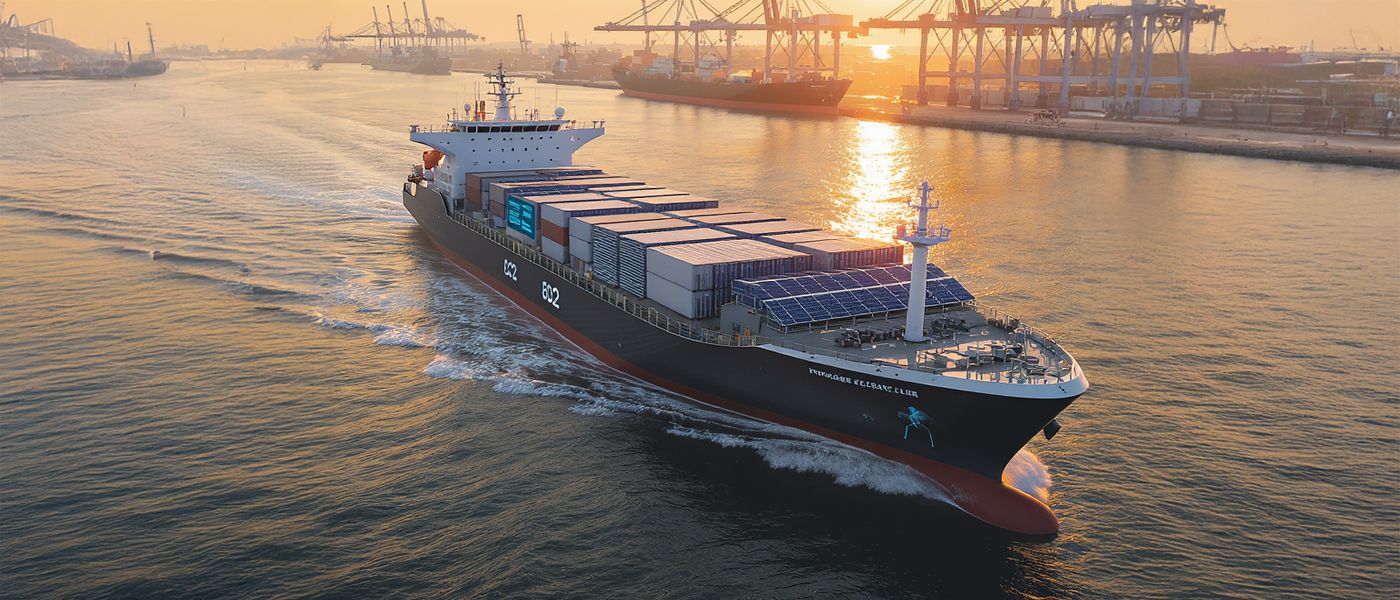
Maritime decarbonisation has moved beyond ambition and intent—it is now an operational reality. The shipping industry has made significant progress in adopting alternative fuels, improving vessel efficiency, and deploying digital tools to monitor emissions. Yet, despite these advances, the pace of decarbonisation remains uneven and complex.
The reason is no longer a lack of technology. The real challenge today lies in governance.
From Technical Solutions to Systemic Alignment
Cleaner fuels such as methanol, ammonia, and biofuels are gaining traction. Efficiency measures—from hull design to route optimisation—are widely implemented. These solutions address how emissions can be reduced. However, they do not address how reductions are measured, priced, verified, and enforced across a globally connected industry.
Shipping operates across borders, but emissions regulations do not. As regional carbon pricing mechanisms and fuel standards expand, operators increasingly face a fragmented regulatory landscape. This disconnect has become a major barrier to scalable decarbonisation.
The Problem of Fragmented Regulation
Different jurisdictions now impose their own emissions reporting frameworks, compliance rules, and carbon pricing systems. A single voyage may fall under multiple regulatory regimes, each with distinct requirements.
This fragmentation creates tangible challenges:
- Duplicated reporting, increasing administrative costs
- Inconsistent carbon pricing, weakening investment signals
- Regulatory overlap, raising the risk of double compliance
- Competitive imbalance, where operators face unequal burdens
Instead of accelerating emissions reduction, complexity introduces uncertainty—slowing investment decisions and delaying fleet transitions.
Why Digitalisation Alone Cannot Solve the Issue
Digital tools have improved emissions tracking and compliance efficiency. However, technology cannot compensate for a lack of coordination. Without shared standards for data integrity and interoperability, digital systems remain siloed.
For emissions data to be meaningful, it must be:
- Consistently measured
- Secure and verifiable
- Trusted across jurisdictions
This level of trust cannot be achieved through technology alone. It requires a governance framework that aligns data standards, verification processes, and regulatory expectations.
The Need for a Governance Architecture
What the maritime industry now requires is not another layer of regulation, but a governance architecture that connects existing systems. Such an architecture would allow different regimes to recognise equivalence, reconcile outcomes, and reduce duplication—while preserving national and regional policy autonomy.
An effective governance architecture would include:
- Common principles for emissions measurement
- Interoperable reporting frameworks
- Carbon pricing equivalence mechanisms
- Coordinated regulatory oversight
By aligning systems rather than replacing them, the industry can reduce uncertainty and strengthen incentives for low-carbon investment.
Why This Moment Matters
The shipping industry has committed to ambitious climate targets, and regulatory pressure will continue to grow. Without a coherent governance architecture, fragmentation risks undermining progress—turning compliance into a cost centre rather than a catalyst for change.
Decarbonisation is inevitable. Effective governance will determine how efficiently—and equitably—it is achieved.
The next phase of maritime decarbonisation is not about discovering new technologies. It is about building the systems that allow existing solutions to scale globally, deliver real impact, and create a predictable pathway to a low-carbon future.
Similar
Insights



We operate in 12 countries with 85+ locations, using expert logistics and digital platforms to provide fast, transparent, and cost-effective freight, warehousing, customs, and delivery services worldwide.