Trade agreements are pivotal for promoting and encouraging international cooperation and driving economic growth. With Trade Agreements in force, it allow the companies to branch out and be competitive in the newer markets and benefit from reduced tariffs, streamlined and standardised regulations and most importantly, eliminating barriers across two nations.
 Understanding Trade Agreements
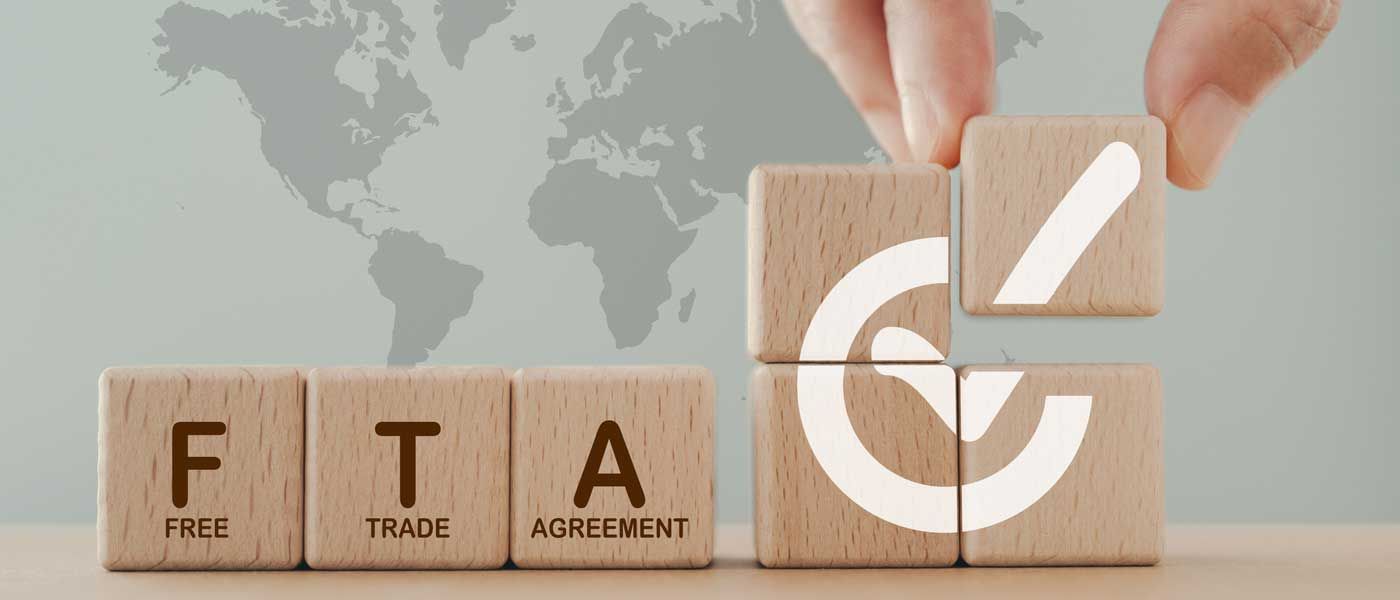
Trade agreements are generally coined as Free Trade Agreements or FTA and are signed between two or more countries (even regions). The clauses mentioned in the agreement are binding on the signing countries and promote trade and economic cooperation by mitigating or reducing barriers like duties, tariffs and costs. With the FTA signed, no trade restrictions or formal agreements can be enforced. The FTA includes:
Unilateral Trade Agreement: A one-sided, non-reciprocal agreements that help countries, particularly developing ones to improve economic development.
Bilateral trade agreement: Signed between two countries to help in reducing barriers.
Multilateral trade agreements: These are regional trade agreements, similar to bilateral or unilateral trade agreements but agreed upon with three or more countries.
Impact of Trade Agreement on Global Supply Chains
Trade agreements lead to the development of global supply chains by offering rewards for nations to increase their exports. As trade is promoted, participating parties experience an increase in Gross Domestic Product (GDP), and the citizens gain better access to goods. The removal of trade barriers leads to more affordable products for consumers. Trade agreements also streamline shipping requirements between countries. The WTO (World Trade Organization) facilitates these agreements and ensures swift and seamless supply chains by reducing clearance times and administrative burdens.
What are the challenges, let’s have a glance
One of the major challenges of any trade agreement is for the countries involved to meet all the regulations and compliance associated with it. Some FTAs are specific to certain products or industries and must adhere to the Rules of Origin guidelines in the agreement. Another challenge is the impact of trade agreements on local economies. If foreign competitors can offer the same product at a cheaper price and without tariffs, then local businesses may struggle to compete potentially leading to business closures and reduced job opportunities.
Despite challenges, the impact of the FTAs on the supply chain is substantial.
Market Access and Tariffs
Free trade agreements are negotiated between two countries on all aspects of the supply chain, from eliminating or reducing tariffs and other trade barriers. This allows market access to companies to procure and sell products across the nation leading to cost savings for businesses and consumers.
Supply Chain Efficiency
Trade agreements can standardize the process concerning regulatory barriers. Streamlined customs procedures and documentation processes offer quick movement of shipments across borders, reducing lead times and costs.
Intellectual Property Protection
Trade agreements typically include provisions for safeguarding intellectual property rights. This is especially mandatory in industries like tech and pharma, where intellectual property plays a pivotal in supply chain management.
Regulatory Convergence
Certain trade agreements aim to standardize regulations and norms across participating nations. This streamlines compliance for businesses operating in multiple markets and minimizes the necessity for supply chain customization
Investment Flows
Trade agreements attract Foreign Direct Investment (FDI). Companies may establish manufacturing facilities or subsidiaries in countries that are party to favourable trade agreements to benefit from lower trade barriers and get access to larger markets.
Risk Mitigation
Supply chains face vulnerabilities due to factors like natural disasters or political instability. By diversifying suppliers across countries involved in trade agreements, businesses can reduce risks by having alternative sources for critical inputs.
Market Expansion
Trade agreements provide opportunities for businesses to access new markets. As trade barriers are mitigated, companies can create new customer bases and expand their revenue streams.
Now we can say that Free Trade Agreements play a crucial role in strengthening global supply chains. it enables businesses to operate more efficiently and competitively in international markets by eliminating barriers, reducing costs, and promoting regulatory convergence. As global trade continues to evolve, leveraging FTAs effectively will be essential for businesses aiming to thrive in a highly interconnected world.
Similar
Insights