Why Traceability Is the New Competitive Edge in Modern Supply Chains
For years, "visibility" was the word that dominated supply chain boardrooms. Know where your shipment is, and you're ahead of the game. But the conversation has shifted — and shifted fast. The companies setting the pace today are not just watching goods move across a map. They are tracing every product across every node: raw materials, factory floor, distribution centres, retail shelves, and even post-consumer cycles. Traceability is no longer a technical feature buried in compliance documentation. It is a genuine competitive advantage — and the gap between those who have it and those who don't is widening every quarter.
Blog
June 12, 2026
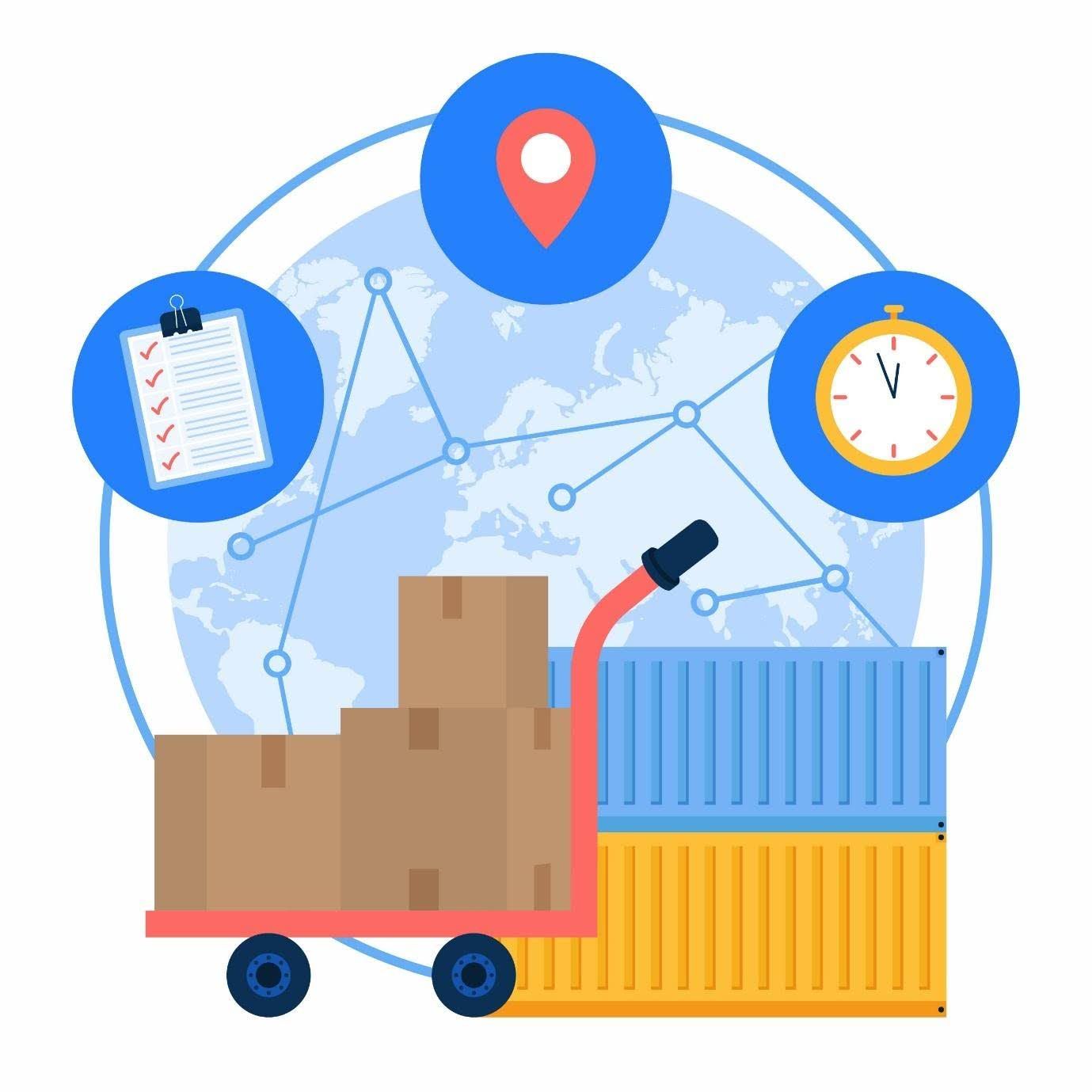
From Audit Checklist to Trust Currency
For most of its history, traceability existed as a reactive instrument — deployed in response to audits, triggered by recalls, or dusted off when regulators came knocking. That era is effectively over. The leaders of 2025 are not waiting for external triggers. They are using traceability to proactively build credibility — proving authenticity, validating ethical sourcing, and demonstrating product integrity before anyone asks.
Apparel companies are mapping fibre origins to verify sustainable inputs. Food brands are enabling farm-to-fork transparency that customers can access in real time. EV manufacturers are ensuring battery minerals are responsibly sourced before a single vehicle rolls off the line. In each case, traceability is doing something far more powerful than satisfying a checklist — it is shifting the brand from promising trust to showing it. That shift is irreversible, and it is already influencing purchasing decisions, partnership negotiations, and market access.
Sustainability Claims Need Evidence, Not Marketing
We have entered the era where a sustainability commitment without traceability is just a slogan. Export-oriented markets and B2B ecosystems no longer accept environmental and ethical statements that cannot be independently verified. Customers and institutional buyers are scrutinising green claims with the same rigour once reserved for financial audits.
Traceability enables businesses to track carbon impact, labour conditions, waste treatment, and recycled inputs across the entire product lifecycle — not just the convenient parts. As global compliance frameworks tighten and sustainability reporting standards become mandatory in key markets, traceability becomes the backbone of a credible ESG position. It is not an add-on. It is the infrastructure on which every sustainability claim must rest.
A Resilience Lever in a Fragmented World
The supply chains of today bear little resemblance to the linear, predictable networks of a decade ago. Geopolitical realignments, climate disruptions, and logistical unpredictability have made risk structural rather than episodic. Disruption is no longer the exception — it is a baseline operating condition.
Traceability helps businesses respond to this reality. It enables organisations to understand supplier tiers in granular detail, anticipate where disruptions are most likely to cascade, verify quality at the source, and transition suppliers without losing process control. In effect, it transforms a supply chain from a rigid, brittle pipeline into an adaptive ecosystem — one capable of absorbing shocks without compromising reliability or customer commitments.
When Products Carry Digital Identities
The technology underpinning traceability has evolved at remarkable speed. IoT sensors now measure real-time conditions at every stage of transit. Blockchain architectures protect and authenticate material history. Predictive data intelligence flags supplier risk before it becomes a crisis. But the real leap forward is the emergence of the digital product passport — a verifiable identity that travels with a product across borders, warehouses, and lifecycle phases.
As major global markets move toward mandatory product traceability standards, early adopters are not simply more compliant — they are more competitive. They onboard new partners faster, satisfy due-diligence requirements with less friction, and access markets where traceability is already a prerequisite for entry. The window to implement ahead of mandate is narrowing.
Proof Replaces Promises
Customers today are equipped with QR codes, digital labels, and traceability platforms that allow them to independently verify where a product comes from and how it was made. Brand messaging no longer operates unchallenged. What can be validated carries more weight than what is advertised, and in crowded categories where differentiation is difficult, proof of origin and ethics becomes a genuine decision-driver.
Supply chain advantage no longer derives solely from scale or cost efficiency. It now demands the ability to demonstrate origin, ethics, safety, and accountability — instantly, with data to back every claim. Companies that build traceability into their operations now will command trust premiums, attract the global partnerships that matter, and stay ahead of compliance rather than scrambling to catch up.
At 20cube, we believe supply chain intelligence is the foundation of modern trade. Traceability is not the future of supply chain competitiveness — it is the filter already separating the leaders from those still catching up. The question is not whether to invest in it. The question is whether you can afford to wait.
Similar
Insights